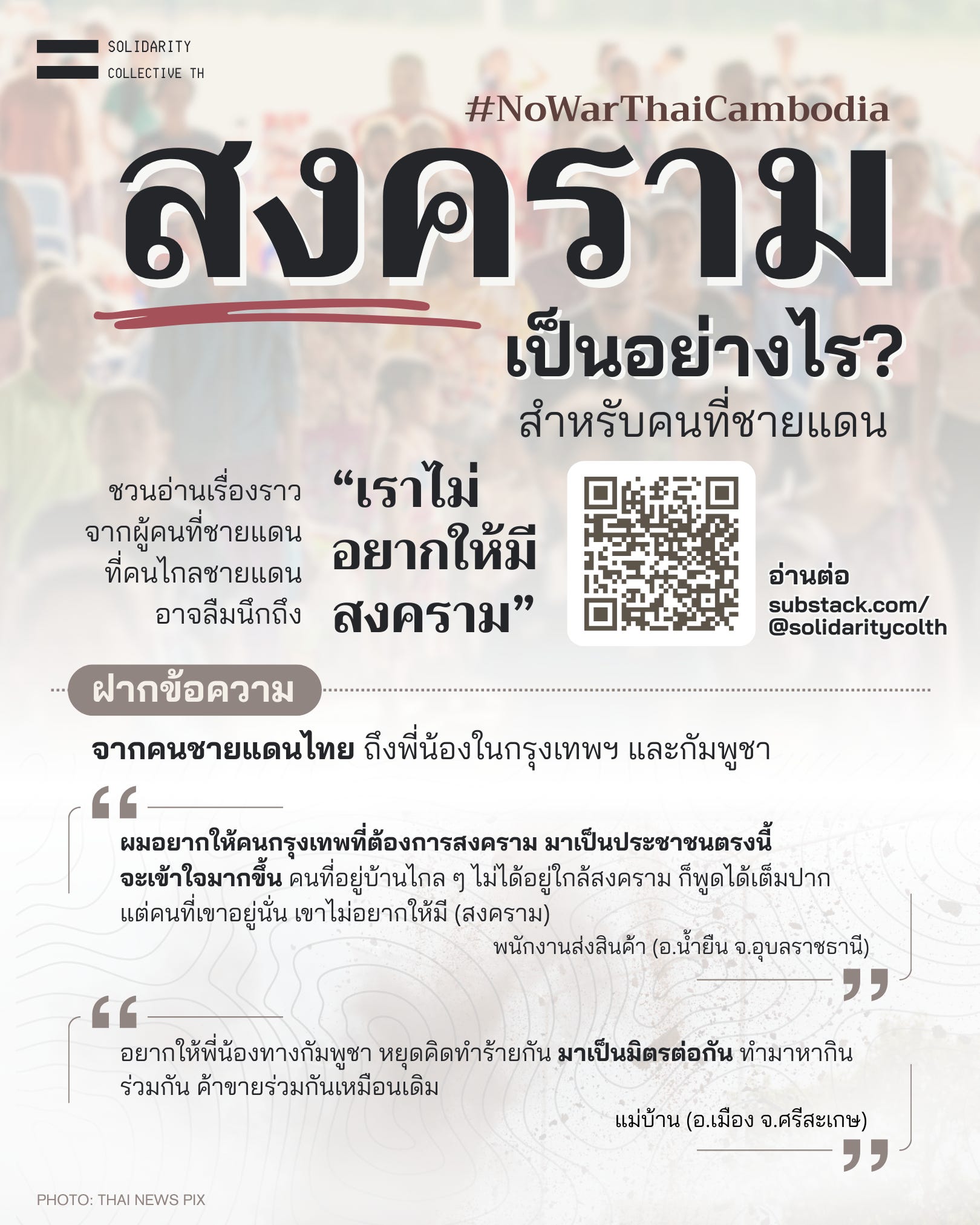
สงคราม เป็นอย่างไร? สำหรับผู้คนที่ชายแดน (What is war like for the people at the border?)
Thai & English

(English version : Click here)
26 สิงหาคม 2568
โดย ทีมงาน Solidarity Collective TH
ครบหนึ่งเดือนแล้วหลังเหตุปะทะทางทหารระหว่างไทยและกัมพูชา โดยการสู้รบยังคงจำกัดอยู่บริเวณชายแดนทั้งสองฝั่ง ส่งผลให้มีผู้สูญเสียทั้งทหารและพลเรือนจากทั้งสองประเทศ แม้จะมีการเจรจาหยุดยิงและหารือทางการทูตต่อเนื่องตลอดเดือนที่ผ่านมา แต่สิ่งหนึ่งที่คนส่วนใหญ่ยังคงเห็นตรงกันก็คือ สถานการณ์จนถึงขณะนี้ยังไม่อาจวางใจได้
ขณะเดียวกัน สงครามข่าวสารและการเผยแพร่ความเกลียดชังผ่านสื่อสังคมออนไลน์ก็ยังไม่ทุเลาลง อีกทั้งบรรยากาศในพื้นที่ชายแดนก็ยังคงตึงเครียด เมืองชายแดนยังคงเงียบเหงาและเต็มไปด้วยความระแวง
Solidarity Collective TH ซึ่งเป็นเพียงกลุ่มของนักเคลื่อนไหวอาสาสมัคร จึงขอทำหน้าที่เป็นอีกหนึ่งช่องทาง ในการนำเสียงของคนจากชายแดนส่งไปถึงคนหมู่มาก ถึงคนห่างไกลที่อาจกำลังสับสนต่อสถานการณ์ในขณะนี้ ว่าควรคิดเห็นอย่างไรดี
ต่อไปนี้คือเสียงและความคิดเห็นจากชาวบ้านในพื้นที่จังหวัดศรีสะเกษ(และใกล้เคียง) หนึ่งในพื้นที่ชายแดนที่ได้รับผลกระทบโดยตรงจากการปะทะทางทหารปลายเดือนที่ผ่านมา ทีมงาน (ผู้มีครอบครัวอยู่ในพื้นที่) ได้รวบรวมสัมภาษณ์มาในช่วงกลางเดือนสิงหาคม 2568
เพื่อหวังว่าเสียงของคนในพื้นที่ จะส่งถึงคนไกลชายแดน ได้มากขึ้นกว่าเดิม
คิดอย่างไรกับสงคราม?
สงครามเป็นอย่างไรสำหรับคนที่ชายแดน? จากเหตุปะทะทางทหารของไทยและกัมพูชา ปลายเดือนกรกฎาคมที่ผ่านมา
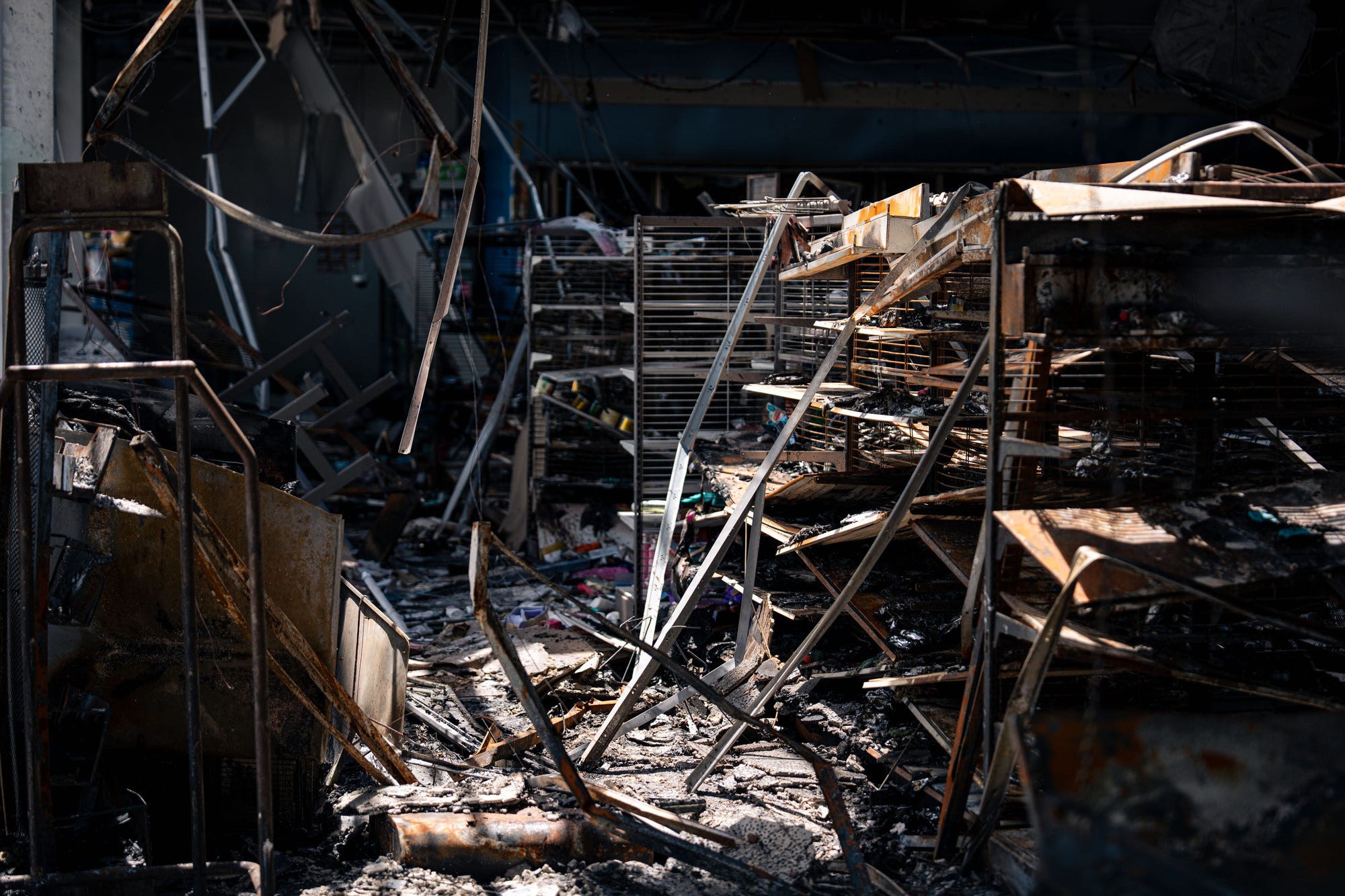
“สงครามน่ากลัวมากค่ะ ภาพที่พี่เห็นคือเห็นเด็กนักเรียนต้องวิ่งเข้าหลุมหลบภัย เห็นผู้คนใช้ชีวิตปกติโดยที่ไม่รู้ชะตากรรมว่าตัวเองจะต้องไปเจอกับอะไร แล้วก็มีญาติที่อพยพมาจากที่อื่นเพื่อมาพักที่หมู่บ้านของเราเพื่อจะได้ปลอดภัย เขาไม่รู้เลยว่าเขาจะมีโอกาสได้กลับบ้านไหม จะมีอะไรกิน เรื่องทรัพย์สมบัติ บางทีบ้านเขาทั้งหลังอาจจะเสียหาย สัตว์เลี้ยงล้มตาย พื้นที่ทำกินเขา พืชไร่พืชสวนของเขาเสียหายไปหมดเลย พี่มองว่าสงครามเป็นอะไรที่มากกว่าคำว่าสูญเสีย มันมีทั้งความหวาดระแวง ความกลัว ความสูญเสีย มันมีทุกสิ่งอย่างเลย น่ากลัวมากจริง ๆ”
— ผู้ช่วยคนแก่/พี่เลี้ยง (อ.อุทุมพรพิสัย จ.ศรีสะเกษ)
“ตอนนี้อยากให้สงบค่ะ อยากให้สงครามจบ เพราะชาวบ้านเหนื่อยที่จะอพยพแล้ว นักเรียนบางคนก็มาโรงเรียน บางคนก็ไม่ได้มา ที่แถบชายแดนคือนักเรียนไม่ได้มาโรงเรียนกันเลย อยากให้สงบเร็วๆค่ะ มันก็อยู่กันลำบาก เกิดความเครียด หนึ่ง ก็คือเมื่อไหร่สงครามจะจบ ทั้งวันคือเสพแต่ข่าว มีความเครียด เขาคิดถึงบ้าน เขาอยากกลับบ้านไปดูแลสัตว์เลี้ยงวัวควายที่เขาเลี้ยงไว้ พืชผักที่เขามี แล้วเขาก็ขาดรายได้”
— อาชีพค้าขาย (อ.กันทรลักษ์ จ.ศรีสะเกษ)
“ก็ไม่อยากให้เกิดสงครามขึ้น ทุกคนต้องมีญาติใช่ไหมคะที่อาจไปอยู่แนวหน้า ถ้าเกิดวันนั้นมันเป็นพี่ เป็นญาติของเรา ที่ได้รับบาดเจ็บ เราก็ต้องเสียใจ ถ้าคนที่เขาไม่มีญาติอยู่แนวหน้า เขาไม่รู้สึกจริง ๆ หรอกค่ะเพราะว่าเขาไม่ได้รับผลกระทบตรงนั้น คือเรามีพี่ชายที่เป็นทหารอยู่ตรงนั้น ถามว่าเราเป็นห่วงไหม เราห่วงค่ะ ใครก็ไม่อยากให้เกิดขึ้นกับญาติตัวเองเนอะ ถ้ามันรบกัน มันก็เกิดการสูญเสียเกิดขึ้นค่ะ ดวงดีหน่อยก็ไม่ใช่ญาติเรา ดวงซวยหน่อยก็เป็นญาติเราค่ะ ไม่อยากให้ใครตาย เห็นด้วยที่ไม่อยากให้มีสงครามค่ะ ใครตายก็ไม่ดี เพราะว่า คนที่พูดได้ก็คือ เขาไม่ได้ไปวิ่งหนีตายอยู่ตรงนั้นค่ะ เขาอยู่ข้างนอก คนกรุงเทพฯก็พูดได้ เขาไม่ได้มาหนีตาย เขามีกำลังทรัพย์ เขามีค่าใช้จ่ายที่พอ คนที่เขาพอกินแล้วเขาก็พูดได้ค่ะ คือคนอยู่แถวนี้บางคนเขาไม่มีแม้แต่รถที่จะอพยพ คือมันลำบาก ถ้าไม่มี(การปะทะ) ดีกว่ามีค่ะ”
— เกษตรกร (อ.กันทรลักษ์ จ. ศรีสะเกษ)
“ลำบากเกี่ยวกับสงคราม คนอยู่กรุงเทพก็มีความเห็นอีกอย่าง การที่แนวความคิดของผมนะ คนอยู่ใกล้ชายแดนก็คิดอีกอย่างเพราะคนอยู่กรุงเทพก็ไม่ได้เดือดร้อนอะไร คนอยู่ใกล้สงครามก็ต้องเดือดร้อน อพยพ คนเฒ่าคนแก่ เด็กเล็ก ความอันตรายมันก็อยู่ใกล้ พอมีสงครามก็ต้องเตรียมพร้อมตลอด เตรียมรถเตรียมของ วิ่งออกจากที่อยู่ มาอยู่ในที่ห่างจากบริเวณนี้ คนอยู่กรุงเทพ คงคิดว่า อยากให้มีการเกิดสงครามให้มันเสร็จสิ้น แล้วๆไป ก็มีเหตุผลของเขา แต่เราลำบาก ไม่รู้ว่าลูกปืนจะมาตกตรงไหน ต้องระวังไว้ก่อน ต้องอพยพ ต้องไป ทิ้งที่ไร่ที่นาที่สวน ถ้าเป็นร้านค้าก็ต้องทิ้ง ไม่รู้จะมีโจรขโมยหรือเปล่า ชีวิตมันสำคัญกว่า แต่ถ้าให้สรุปว่า จะทำยังไงดี ก็ลำบาก ตัดสินใจยาก ก็อยากให้มันเสร็จสิ้นไป ถ้า 4-5 วันแล้วอาทิตย์สองอาทิตย์แล้วมันจบ ถ้ามันจะเสร็จจริงๆก็น่าทำ แต่ถ้ามันไม่เสร็จก็จะยืดเยื้อ จะลำบาก ทำมาหากินไม่สะดวก
ผมไม่ได้ร่ำเรียนมาว่า ส่วนไหนเป็นของเขมร ส่วนไหนเป็นของไทย แต่คิดว่ามันน่าจะคุยกันรู้เรื่อง แต่มันก็ไม่รู้เรื่อง ก็ลำบากใจเหมือนกัน เมื่อก่อนก็ไม่ได้แบ่งแย่งกัน อันนี้ผมพูดเป็นกลางนะ ช่องอานม้า ช่องอะไรเนี่ย คนไทยก็บอกว่าเป็นของคนไทย แต่ที่จริงก็เป็นตลาดเขมร เขาทำมาหากินกัน แต่เราก็ไปทำลายเขา เอาลวดหนามไปใส่ กั้นไม้บอกว่าตรงนี้เป็นที่ของเรา ตรงนั้นเป็นที่ของเขา เขาน่าจะคุยกันดี ๆ ให้รู้เรื่องนะ ว่า ตรงนี้เป็นที่ของเรา แต่ให้โอกาสทำมาหากิน ให้เขาทำไปก่อน ไม่ต้องยิงกัน มันไม่ต้องมีสงครามอย่างงี้ ผมคิดว่า เป็นความคิดส่วนตัวผม มันน่าจะดีกว่าที่อยู่ ๆ ก็มายิงกัน ทั้งที่คุยกันก็น่าจะรู้เรื่อง ผมเป็นคนอยู่ใกล้สงคราม ผมก็ลำบาก ผมก็เป็นคนแก่อยู่เหมือนกัน ตอนแรกก็ให้ครอบครัวไปก่อน ตอนหลังก็ตามเขาไป ตอนนี้ทหารทางเราก็ขึ้นไปตรึงกำลัง ของเขาก็มีตรึงกำลัง ดูแนวโน้มแล้วมัน ไม่น่าจะตกลงกันได้ ผมก็ไม่ทราบเหมือนกัน ทหารของเราก็ขาขาด ฝั่งเขมรก็มาวางระเบิดดักอะไร แต่ฝั่งเขาก็ตายเยอะเหมือนกัน เราก็มองเป็นภาพส่วนรวม เขาน่าจะเสียเปรียบเรามากกว่า ความเสียหายมันเกิดที่เขามากกว่าเรา แต่ของเราก็เสียหายไม่น้อยเหมือนกัน เขาก็ยิงมาแบบไม่มีจุดหมาย ตามที่ข่าวลงมา ตามทุ่งนา ตามสวนยาง ตามหมู่บ้าน ทำให้มีคนเสียชีวิต”
— ชาวสวน (อ.กันทรลักษ์ จ. ศรีสะเกษ)
“ลำบาก ประชาชนเดือดร้อนมาก เท่าที่ผมไปส่งของไปเจอมา มีประชาชนต้องทิ้งบ้าน ทิ้งทุกอย่าง เอาไปได้แค่ของสำคัญ บางคนยอมไม่ทิ้งบ้านและให้ลูกเมียไป ตัวเองเฝ้าบ้าน ทั้งที่รู้ว่าความเสี่ยงทุกนาที อาจจะโดนตอนไหนก็ได้ บางบ้านไม่มีรถ มีอะไรก็ต้องไป ใส่มอไซค์ พ่วงข้างอะไรก็ต้องไป ทำงานส่งสินค้า บริษัทก็ห้ามไม่ให้เข้าพื้นที่เสี่ยงเลย”
— พนักงานส่งสินค้า (อ.น้ำยืน จ.อุบลราชธานี)
“เรามีพี่ชายอยู่แนวหน้า คิดทุกวัน ว่าเขายังปลอดภัยดีใช่ไหม เขากินข้าวหรือยัง วันนี้ฝนตก มีคนยิงกัน เป็นห่วง ไม่อยากให้เกิดการปะทะกันเลย อยากให้คุยกันด้วยสันติ ถ้าเกิดการปะทะ เราก็ไม่อยากให้ใครตาย ไม่ว่าจะเป็นญาติเรา หรือคนฝั่งกัมพูชา มันไม่ใช่เสียแค่ชีวิต มันเสียทุกอย่างที่ทำมา เช่น สร้างบ้านด้วยเงินเก็บทั้งชีวิต ไม่มีปะทะดีกว่า ไม่อยากให้มีสงคราม”
— อาชีพรับจ้าง (อ.กันทรลักษ์ จ. ศรีสะเกษ)
“สงคราม ทำให้เห็นคนไม่มีที่อยู่ เห็นคนลำบาก ความวุ่นวาย โกลาหล ความตื่นตระหนก ทุกคนต้องย้ายจากพื้นที่โดยด่วน แต่ละคนไม่ได้เอาอะไรมาเลย มีเสื้อผ้าชิ้นเดียวติดตัวมา ไม่น่าเกิดขึ้นเลย ตั้งแต่อยู่จนอายุปานนี้ ไม่คิดเลยว่าจะมีเกิดขึ้น ไม่คิคว่าสงครามจะยังมีอยู่ในภูมิภาคเรา”
— พนักงานบริษัท (อ.อุทุมพรพิสัย จ.ศรีสะเกษ)
“เศรษฐกิจมันไปไม่ได้ ทำมาหากิน อยู่ด้วยความหวาดระแวง ทำงานทำของอะไรงี้ เราก็กลัวว่าเราทำครึ่ง ๆ กลาง ๆ แล้วระเบิดขึ้นมา มันก็จบหมดเลย ขายของไม่ได้ ต้องอพยพ ความพร้อมก็ไม่มี สถานที่ให้เราไปพักมันก็ไม่มี มีข่าวลือมาเรื่อย ๆ อยู่ด้วยความหวาดระแวง เดี๋ยวนี้เขาปิดศูนย์(อพยพ)ไปหมดแล้ว ปล่อยให้ประชาชนกลับบ้าน ประชาชนตามตะเข็บชายแดนเขาไม่มีความสุข เขาหวาดระแวง ต้องมาตอนนอกบ้าน ได้ยินเสียงโดรน บางคนเขาเลือกจะไม่อยู่ตรงนั้น ไปอยู่บ้านญาติแทน อยากให้หาทางออกร่วมกัน ที่ดีที่สุดในความรู้สึกเรา อยากให้ตามแนวชายแดนมีพื้นที่พรมแดนที่แบ่งชัดเจน เราไม่อยากให้มีสงครามเกิดขึ้นเลย อยากให้ทุกคนมาเจรจา มาคุยกัน ถามว่าเราอยากได้สงครามไหม เราไม่อยากได้ ได้ยินเสียงปืนเราก็ตกใจแล้ว”
— อาชีพค้าขาย (อ.กันทรลักษ์ จ.ศรีสะเกษ)
ได้รับผลกระทบอะไรกันบ้างจากเหตุปะทะที่ผ่านมา?
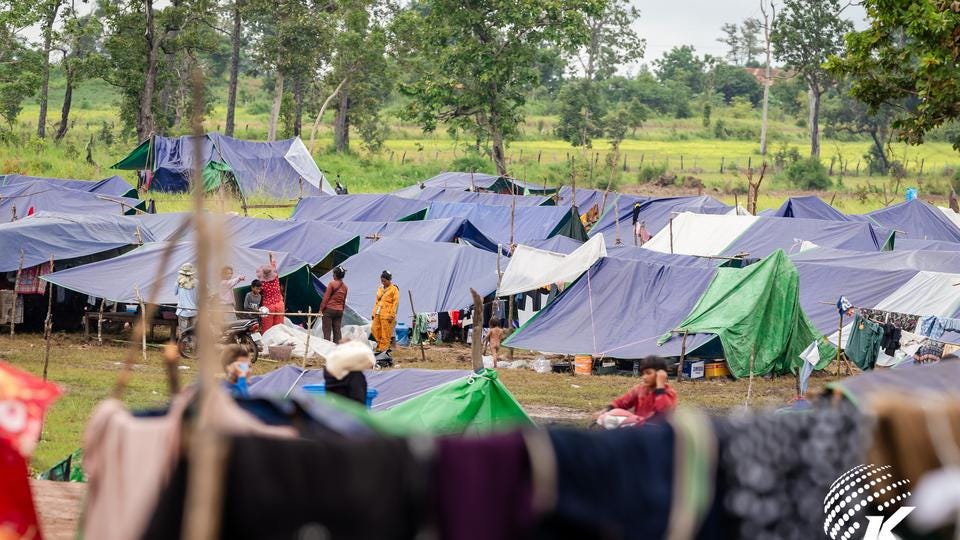
คนที่ชายแดนจำนวนมหาศาลต้องลี้ภัย โดยจำนวนสูงสุดประเมินไว้อยู่ที่ 188,734 คน จาก พื้นที่ 7 จังหวัดของประเทศไทย คนชายแดนต้องเผชิญกับอะไรบ้าง? แต่ละครัวเรือนมีข้อจำกัดที่แตกต่างกันอย่างไร?
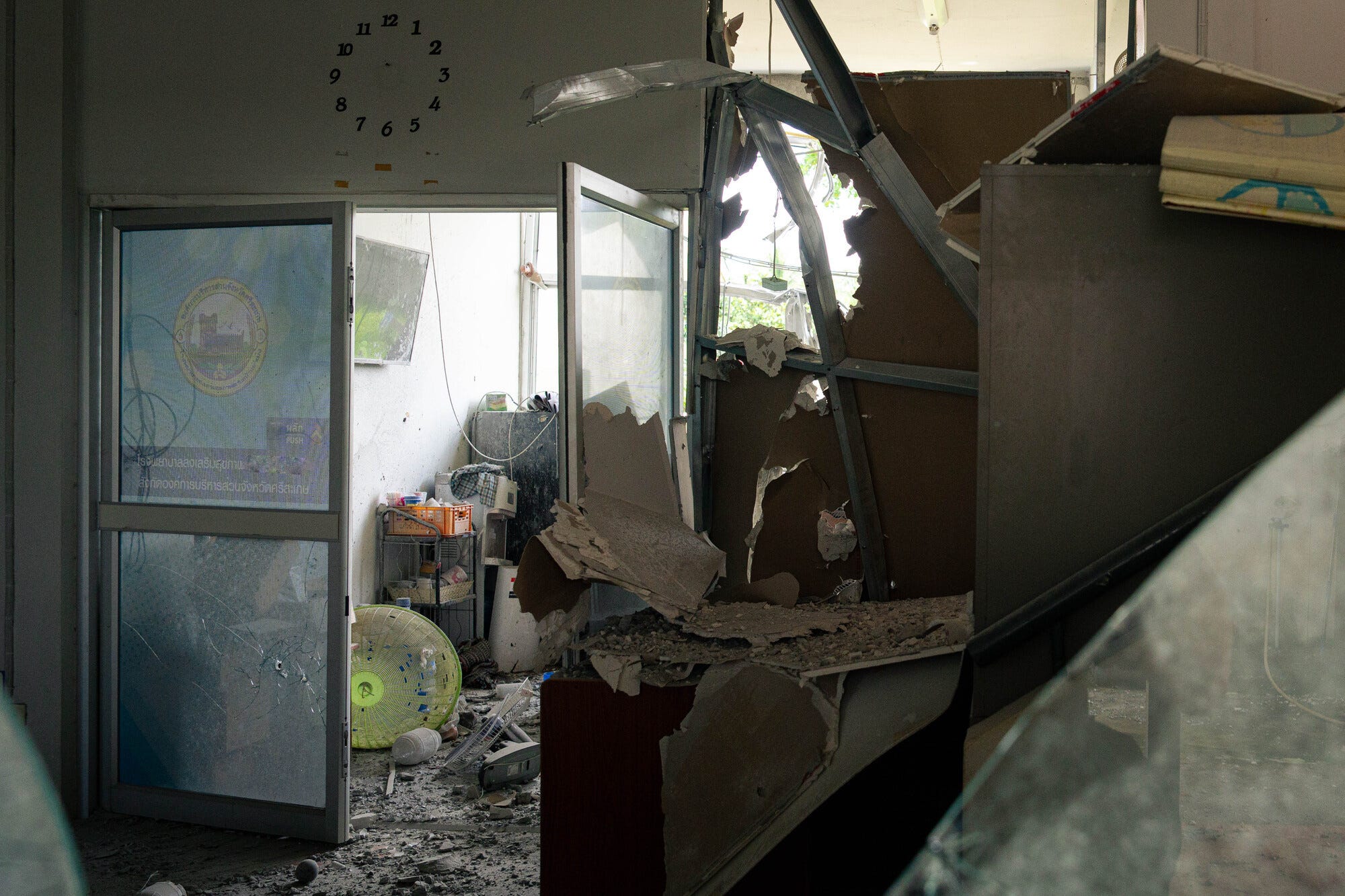
“ครอบครัวแต่ละครอบครัวมีความเป็นอยู่ที่ไม่เหมือนกัน ถ้าครอบครัวไหนเขาพร้อม เขาก็ไม่จำเป็นต้องไปศูนย์อพยพ เขาสามารถไปพักในโรงแรมได้ หาซื้อของกินได้ไม่ลำบาก แต่ครอบครัวที่หาเช้ากินค่ำ เขาต้องไปนอนที่ศูนย์อพยพ ที่มีแค่พัดลม มีแค่ไฟ ก็จริงที่เขามีอาหารที่ราชการหรือหน่วยงานนำไปช่วย แต่อยู่ที่ไหนก็ไม่สบายเท่าบ้านเรา ด้วยวิถีชีวิตของชาวบ้าน วันนึงเขาจะทำไร่ทำสวน เลี้ยงสัตว์ ไปสวนไปไร่ไปนา เขาก็จะมีกิจกรรมทำของเขาอยู่แล้ว แต่เขาต้องทิ้งตรงนั้นเพื่อให้ตัวเองปลอดภัยและมาอยู่ศูนย์อพยพ แล้วรายได้ก็ไม่มี ถ้าเกิดว่าเขาเป็นลูกจ้างรายวันแค่สองร้อย สามร้อยบาท รายได้ตรงนั้นก็หายไปเลย ครอบครัวก็ไม่มีที่จะอยู่จะกิน หรือแม้กระทั่งในความสงบที่หยุดยิงแล้วกลับไปอยู่บ้านได้ เขาก็ต้องไปเริ่มใหม่ เพื่อที่จะมีเงินมาเลี้ยง มาซื้ออาหารให้ครอบครัว นี่เป็นความลำบากที่ถึงแม้คุณจะหยุดยิงแล้วก็ตาม กว่าชีวิตเขาจะเริ่มได้ หรือบางคนที่บ้านเขาเสียหาย ต้องใช้เงินมหาศาล ในความรู้สึกของเขา เงินทั้งชีวิตสร้างบ้านหลังนึง มันต้องไปเริ่มใหม่ ซึ่งบางคนอายุมันเลยช่วงวัยที่จะหาได้แล้ว ลำบากมาก
บางที ในที่ ๆ มันเกิดการปะทะใกล้มาก มันก็จะไม่มีบ้านหรือห้องเช่าห้องแถวให้เราไปเช่า ก็จะเป็นบ้านของคนอื่น หรือบางคนทำกระต๊อบเล็ก ๆ หรือไปเป็นลูกจ้างแล้วพักในกระต๊อบเล็ก ๆ ของเจ้าของสวนที่เขามีที่พักให้ บางคนน่ะ ระเบิดมาลงแล้วไหม้ทั้งหลัง ด้วยเขาไม่ได้มีอาชีพที่มีรายได้มาก พอสร้างบ้านมา กะว่าจะอยู่ไปทั้งชีวิต แต่ระเบิดลงแล้วไฟไหม้บ้าน ศูนย์อพยพให้กลับไปแล้วเขาจะไปอยู่ไหน บ้านไม่มีให้อยู่ แล้วด้วยเขาหาเช้ากินค่ำ เขาจะหาเงินที่ไหนมาสร้างบ้านอีก เสาต้นนึง สังกะสีแผ่นนึง กี่บาทกี่สตางค์ แล้วอายุก็ไม่ได้น้อย 50-60 ปี จะทำงานอีกเท่าไหร่ถึงจะได้บ้านอีกหลังนึง เป็นความลำบาก ความลำบากที่มองเห็นภาพ แล้วถ้าเกิดคุณเจรจาหยุดยิงแค่นี้ แล้วกลับไปเกิดฝ่ายใดไม่หยุด ปะทะกันขึ้นมาอีก ทีนี้เสียบ้านแล้วเสียอะไร ถึงขั้นต้องเสียชีวิตด้วยเลยหรือเปล่า
แล้วพืชสวน ต้นยางพารา สวนที่เขาปลูก ไร่นาที่เขาปลูก แล้วมันเสียหาย เขาจะไปเรียกร้องจากใครได้ เพราะคนที่มีเขาก็คิดแค่ว่าไปปลูกใหม่ แต่มันใช้ทั้งแรงกายและแรงใจ กว่าเขาจะได้เท่านี้มา การลงทุนไม่ใช่น้อย ๆ กว่าจะคืนมา เขาจะไปเรียกร้องมาจากไหน แล้วใครจะมายืนยื่นให้ว่าผมจะช่วยเอง คุณช่วยไหวเหรอ แล้วมันไม่ใช่แค่ศรีสะเกษเรานะ แล้วที่อื่นล่ะที่มันรุนแรงมาก ๆ เขาจะเอาอะไรมาอุ่นใจ”
— ผู้ช่วยคนแก่/พี่เลี้ยง (อ.อุทุมพรพิสัย จ.ศรีสะเกษ)
“สงครามนี้มีผลกระทบกับพี่คือ ลูกหลานของพี่ต้องหยุดเรียนเพราะหวาดกลัว ฟังข่าวได้ยินข่าว เขาก็กลัว ทั้งโรงเรียน ผู้ปกครอง คุณครู ก็ต้องหวาดกลัวกัน กลัวเขาจะฟาดระเบิดใส่ ยิงปืนใส่ กลัวลูกหลง ระหว่างสงคราม เด็ก ๆ ก็กลัว พ่อแม่ก็ไม่สบายใจ ก็คิดเห็นใจคนอื่นที่มีญาติพี่น้องอยู่ใกล้ ๆ ชายแดน เราก็รู้สึกสงสารหวาดกลัว ไม่อยากให้ยิงกัน ไม่อยากให้มีสงคราม
เราก็อยู่อย่างหวาดผวา ลูกไปเรียนอยู่ใกล้ ๆ ชายแดน แม่ก็นอนไม่หลับ กินไม่ได้ นอนผวา สงสารลูก กลัวว่าลูกจะลำบากไหม ลูกจะโดนไหม คิดอีกอย่างนะ ชาวบ้านที่เขาอยู่เขตชายแดน บ้านเขาพังถูกระเบิดไฟไหม้ ทั้งฝั่งกัมพูชา ทั้งฝั่งเรา แล้วสมควรไหมที่จะให้เกิดสงคราม จะยิงกันจะสู้กันจะรบกัน คุณคิดสิ เราเป็นประเทศเพื่อนบ้าน สงสารไหม พี่น้องชายแดนทั้งฝั่งเขมรทั้งฝั่งเรา ชาวบ้านเขาสร้างบ้านมา เขาก็หวังอยากอยู่บ้าน แต่เขาต้องมาอพยพเพราะเกิดการชิงดีชิงเด่นระหว่างแผ่นดินนั้นกับแผ่นดินนี้ คิดสิ เขากลัวและต้องทิ้งทุกอย่างเพื่อเอาชีวิตไว้ก่อน เขาคิดว่าเผื่อหาใหม่ได้ แต่พอกลับไป ทั้งบ้าน ทุกสิ่งทุกอย่างที่เขาปลูกไว้ สร้างไว้ พังเสียหายหมด สงสารมาก ไม่ใช่ว่าแค่ให้เราสงสารตัวเอง อยากให้ทั้งกัมพูชาและไทยสงสารเพื่อนบ้านบ้าง อย่าคิดเลยจะมาแก่งแย่งชิงดีชิงเด่น อยากได้พื้นที่ของเขา เราจงผูกมิตรกันเป็นพี่น้องอย่างนี้ตลอดไป”
— แม่บ้าน (อ.เมือง จ.ศรีสะเกษ)
“มีเพื่อนย้ายมาจากกันทรลักษณ์ แต่ไม่รู้จะไปอยู่ที่ไหนก็ติดต่อมาหาเรา ที่พักพิงมี แต่มันเต็ม เราก็ต้องไปช่วยวิ่งหาโรงแรม แต่ที่พักโรงแรมก็หายาก เพราะมีแต่คนลี้ภัยมา คือเราก็ไม่รู้ว่าเราจะต้องช่วยเหลือเขาในส่วนไหนบ้าง เขามากันแบบที่เราก็ไม่รู้ว่าจะมากันกี่คน จะช่วยหายังไง ส่วนมากเขาก็ไม่ค่อยมีเงินที่จะมาเช่าโรงแรมอยู่หลายวัน หรือเกือบเดือนแบบนี้ ค่าใช้จ่ายมันก็เยอะ แล้วบางคนแทบจะไม่มีเงินซื้ออาหารกิน ถึงจะมีช่วยเหลือ แต่ก็เข้าใจว่ามันมีหลายพื้นที่ มันไม่เต็มที่ เราก็ต้องช่วยเหลือจุนเจือเขาไปด้วย ส่วนมากเขาก็ลำบาก เราก็ช่วยได้เท่าที่ช่วยได้ เขาลี้ภัยมา เราก็ช่วยเขา เราก็กลัว กลัวทุกวันว่าระเบิดจะมาถึงเราไหม จะมาตอนไหน นอนก็ไม่หลับ คิดว่ามันจะถึงเราไหม วันไหนน้อที่จะเป็นเรา กับเห็นที่เกิดในปั๊มน้ำมัน เห็นแล้วสะท้อนใจมาก ที่ยายอุ้มหลานแล้วเสียชีวิตในรถ สะท้อนใจมาก ไม่น่าจะเกิดขึ้น
ไม่รู้ว่าเขาจะแก้ไขยังไงถึงจะยุติลงจริง ๆ เราก็อยากให้แก้ไขในส่วนที่มันไม่จริงจังสักที เราหยุดแต่เขาไม่หยุดอย่างนี้ มันก็ไม่หยุดสักที สร้างรอยร้าวฉาน ให้ไม่มีความสามัคคี ยิ่งเศรษฐกิจอย่างนี้ยิ่งไม่ควรให้มีเลยสงคราม สงสารพี่น้องไทยทุกคน สงสารที่อยู่ชายแดน แม้กระทั่งตัวเอง ไม่รู้ว่าถ้าเราเจอผลกระทบที่หนัก ๆ มากกว่านี้เราจะอยู่กันยังไง เราจะทำมาหากินยังไง แล้วเศรษฐกิจแบบนี้เราก็หาเช้ากินค่ำอยู่แล้ว ไหนจะมาโดนบ้านเรือนพังเสียหาย การเริ่มต้นใหม่มันยาก กว่าเราจะได้มาทั้งชีวิต ชีวิตทั้งชีวิตตั้งแต่ที่เริ่มต้นหาเงินได้ กว่าเราจะเก็บเงินมาทำบ้าน ทำนู่นทำนี่ได้ กว่าจะได้มาทุกอย่างด้วยหยาดเหงื่อแรงงานของตัวเอง มันต้องสูญเสีย ไม่มีอะไรที่จะมาทดแทนที่มาเสียไปได้เลย ไม่อยากให้มี ไม่อยากเห็นใครต้องเสียน้ำตา ไม่อยากให้ใครต้องเสียเลือด ไม่อยากให้ใครต้องเสียลูกเสียเมียเสียพ่อเสียแม่ ไม่อยากให้ใครต้องเสียครอบครัวดี ๆ ไม่อยากให้ใครต้องไปฆ่ารบปรบมือ ไม่มีเวลาให้ความสุขของตัวเอง มัวแต่ไปอยู่เขตแดนเพื่อปกป้องประเทศ เวลาพักก็ไม่มี”
— แม่บ้าน (อ.เมือง จ.ศรีสะเกษ)
“คือมันต้องทิ้งบ้าน ทิ้งทุกสิ่งทุกอย่างที่เรามี หนี หนีเอาชีวิตรอดก่อน คือมันต้องมีค่าใช้จ่าย เริ่มแรกมันก็ต้องมีการเดินทาง ทุกสิ่งอย่าง มันก็ต้อง เสียเวลาค่ะ แล้วก็เสียทรัพย์สินที่เราจะเอามาใช้ทำอย่างอื่น เราก็ต้องเอาไปอพยพ เราก็ต้องเอาไปใช้จ่ายข้างหน้าก่อน
ทุกคนที่เขาทำการเกษตรเขาก็ต้องทิ้งบ้าน ทิ้งผลผลิต ที่จะต้องเก็บผลผลิต บางคนเขาก็กำลังเพาะปลูกใหม่ เขาก็ต้องทิ้งช่วงนี้ไป ถามว่ามีไหมก็ไม่อยากให้มีค่ะ ไปอยู่ที่อื่นมันก็ไม่เหมือนอยู่ที่บ้านค่ะ มันลำบากในการใช้ชีวิต เพราะว่าเราเคยอยู่ตรงนี้ คือเราชินกับเขตบ้านเราเนอะ เคยใช้ชีวิต เคยดำรงชีวิตอยู่ แล้วเราต้องย้ายไปอยู่ตรงที่อื่น แล้วมันก็แปลกถิ่น แล้วมันก็มีค่าใช้จ่าย คือคนที่เขาไปอยู่ศูนย์อพยพ เขาก็ต้องคิดถึงบ้านเหมือนเดิมนั่นเแหละค่ะ เป็นห่วง ถ้าเกิดว่าดวงซวย ลูกปืนมาตกที่บ้านเราอย่างนี้ เราจะทำยังไง อยู่ดีๆ กลายเป็นคนไม่มีบ้านค่ะ ถ้ามันไม่โดนบ้าน มันก็ดีไปค่ะ แต่ว่าคนที่เขาได้รับผลกระทบจริงๆคือ อาวุธสงครามเนอะ มันมาตกที่บ้านเรา แล้วเราจะทำยังไงเกิดเป็นคนไม่มีบ้านขึ้นมา มันลำบากค่ะ จากที่เรามีบ้าน มันก็คงมีบางส่วนค่ะที่มันโดนหนัก คนที่เขาได้รับผลกระทบจริง ๆ แต่มันก็ต้อง ถ้าเขาเกิดยิงกัน มันก็ต้องอพยพ เพราะว่าทุกคนเขาก็ต้องเอาชีวิตรอดก่อนค่ะ แต่ถ้าว่า ไม่มีดีไหม ไม่มีดีกว่าค่ะ มันเสียเวลา เสียทุกอย่างค่ะ แต่ถ้ามันมีแล้ว เราก็ทำอะไรไม่ได้ใช่ไหมคะ เราก็ต้องถอยออกไปจากตรงนี้ที่เราอยู่ค่ะ”
— เกษตรกร (อ.กันทรลักษ์ จ. ศรีสะเกษ)
“ทุกคนได้รับผลกระทบ นอกจากเรื่องเศรษฐกิจ ก็มีเรื่องสุขภาพจิต มีความหวาดระแวง สมมติได้ยินเสียงรถวิ่งดัง ๆ ฟ้าร้อง ทุกคนคิดเหมือนกันเลยว่าระเบิดมารึเปล่า ทำมาหากินเศรษฐกิจไม่ดีอยู่แล้ว มาเจอแบบนี้เหมือนซ้ำอีก เมื่อคืนมีเสียงฟ้าร้องเปรี้ยงเดียว เหมือนปืนใหญ่ ทุกคนมาโพสต์ถามกันหมดเลย ผวากันหมด ศูนย์ก็ไม่มีรองรับ”
— อาชีพค้าขาย (อ.กันทรลักษ์ จ.ศรีสะเกษ)
คิดอย่างไรกับการหยุดยิง?
คนที่ชายแดนคิดอย่างไรกับการหยุดยิงและเจรจาทางการทูต?
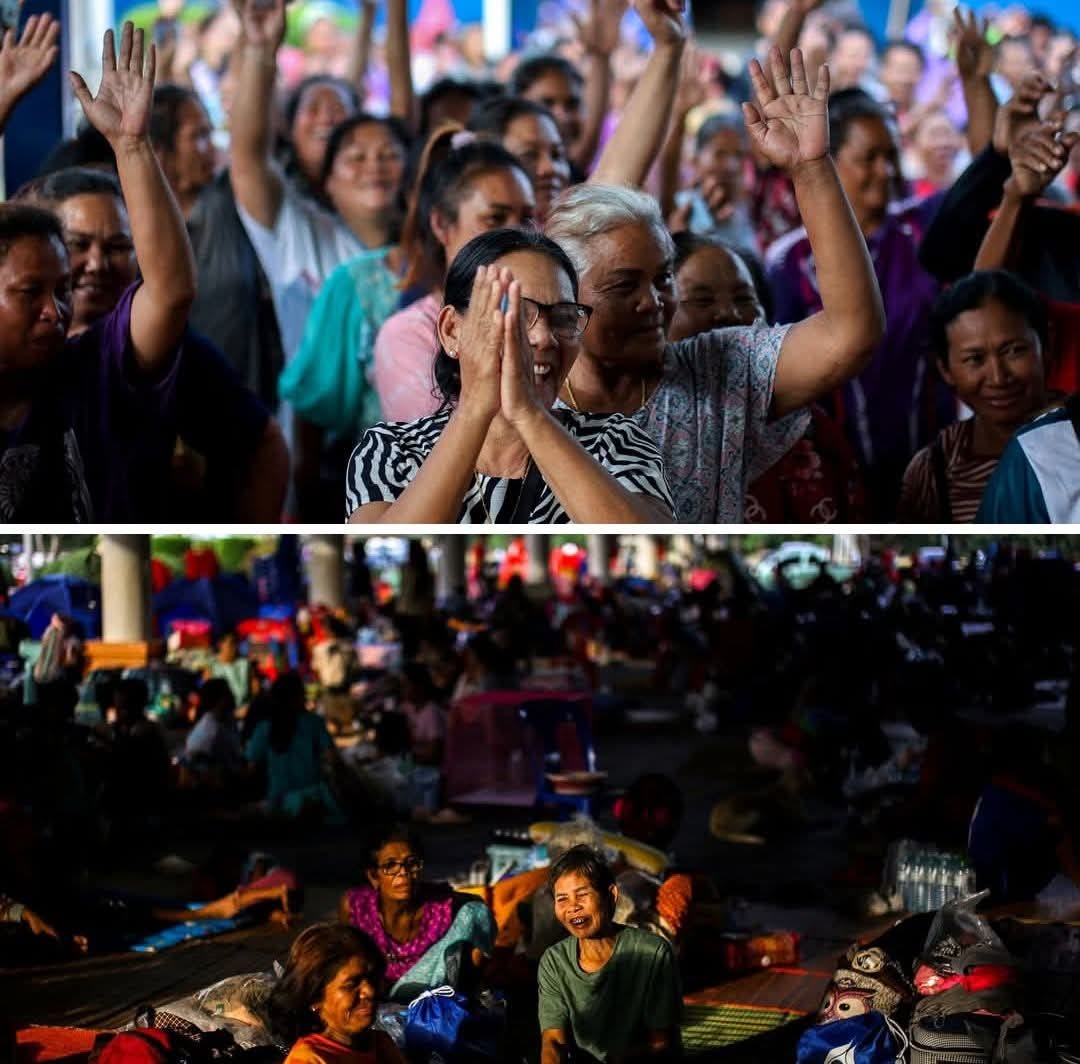
“การหยุดยิง ถ้ามองในแง่จากภาพที่พี่เห็น ถ้าหยุดยิงแล้วทำให้ทุกฝ่าย ทั้งฝ่ายตรงข้ามและฝ่ายเรา มีวิธีที่สื่อสารพูดคุยหรือข้อตกลงอะไรก็ได้ที่ดีกว่าการทำให้ความรุนแรงทวีขึ้น น่าจะเป็นทางออกที่ดี แต่ต้องเป็นวิธีที่รับได้ทั้งสองฝ่าย ไม่มีฝ่ายไหนเสียหาย เสียเปรียบ หรือด้อยกว่า เป็นการตกลงที่สันติวิธีจริง ๆ อันนี้น่าสนับสนุนให้มี”
— พี่เลี้ยง (อ.อุทุมพรพิสัย จ.ศรีสะเกษ)
“อยากให้ยุติ อยากให้หยุดจริง ๆ แล้วจับมือกัน แล้วทำมาหากินแบบปกติเหมือนเดิม ฉันพี่น้องกัน เหมือนที่ผ่านมา ไม่ต้องมีปัญหาอะไรกัน เป็นพี่น้องทำมาหากินร่วมกัน รัฐบาลไทยก็ควรจะออกมาแก้จุดนี้ ควรจะแก้จริง ๆ จัง ๆ สักที ทุกวันนี้ไม่เห็นหยุดจริง เดี๋ยวก็ยิงตรงนั้น ยิงตรงนี้ ไม่รู้ว่ารัฐบาลจะแก้ไขยังไง อยากให้หยุดจริง ๆ ไม่ต้องมีการเสียหาย ไม่ต้องมีการเสียชีวิตเกิดขึ้นอีก”
— แม่บ้าน (อ.เมือง จ.ศรีสะเกษ)
“การหยุดยิงต้องถามว่ามันหยุดแค่ชั่วคราว หรือมันจะถาวรไหม อยากให้มันหยุดยิงแบบถาวรไปเลยจบๆ ก็คือคุยวันนี้แล้วก็จบไปเลย อยากให้เขามาช่วยดูตรงที่เขามีข้อพิพาทกัน เขาเรียกว่าอะไร ศาลโลกอย่างนี้เหรอ อยากให้มีศาลโลกหรือที่เป็นศาลกลางให้เขามาดูเรื่องเขตแดนที่มีข้อพิพาทกันตามที่จังหวัดต่าง ๆ จะได้จบ”
— ผู้ประกอบอาชีพค้าขาย (อ.กันทรลักษ์ จ.ศรีสะเกษ)
“ถ้าหยุดยิง จะดีมาก อยู่ด้วยกันอย่างสันติ กลับมาใช้ชีวิตปกติ ที่บ้านปลูกมะละกอ เอาไปส่งตลาดชายแดน ตอนนี้ตลาดชายแดนมันปิด เราก็ไม่รู้จะเอาไปส่งที่ไหน โดนกดราคา ขาดทุนมาก ถ้าหยุดยิงคือดีใจมาก อยากให้กลับไปค้าขายกันเหมือนเดิม”
— อาชีพรับจ้าง (อ.กันทรลักษ์ จ. ศรีสะเกษ)
“ถ้าหยุดยิงแล้วตกลงกันได้ โดยสันติภาพ มันค่อนข้างที่จะโอเคนะคะ มันจะได้ไม่เกิดความสูญเสียทั้งเราทั้งเขา”
— พนักงานบริษัท (อ.อุทุมพรพิสัย จ.ศรีสะเกษ)
“หยุดยิงก็ไม่ได้หยุดจริง ฝั่งนั้นก็ยังยิงเรื่อยๆ ยังได้ยินเสียงบ้างขนาดเราอยู่ในเมือง มันยังไม่ใช่การหยุดยิงจริง เรากลัวว่ามันจะปะทะกันอีกรอบ กลัวมันจะรุนแรงขึ้น”
— อาชีพค้าขาย (อ.กันทรลักษ์ จ.ศรีสะเกษ)
ทางออกควรเป็นยังไง?
คนชายแดนเห็นภาพปลายทางของปัญหานี้ไว้อย่างไรกันบ้าง?
“คืออยากให้ทุกประเทศอยู่กันอย่างสันติ สันติวิธี ไม่ต้องแก่งแย่งชิงดีกัน ผู้นำทั้งสองฝ่ายและผู้นำอำนาจใด ๆ คือ ก่อนที่จะมีข้อพิพาท ถามว่ามันปกติสุขไหม มันก็ไม่มีสงครามเนอะ มันก็ปกติในระดับนึง จะเป็นไปได้ไหม ถ้าคุณสองฝ่ายมาคุยกัน แล้วให้มันอยู่ไปอย่างนั้น ตกลงกัน แต่พูดไปเราก็ไม่ได้ต้องการให้แบ่งแยกดินแดน ไม่ได้อยากให้มีการรุกล้ำอธิปไตย เพราะการรักชาติก็ปลูกฝังมาให้เรารักพื้นที่ของเรา เราไม่อยากให้ใครมารุกราน ก็ทั้งสองฝ่ายไม่รุกรานกัน ก็คงจะเป็นทางออกที่ดีที่จะไม่ทำให้เกิดสงคราม”
— พี่เลี้ยง (อ.อุทุมพรพิสัย จ.ศรีสะเกษ)
“เรื่องเขตแดนนะ ผมไม่ได้มีความรู้อะไรนะ แต่ก็อยากให้ทั้งสองฝ่าย ชี้เขตแดนให้มันลงตัว ทำเขตแดนจะลวดหนาม กั้นกำแพง หรือจะชี้แนว ยังไงก็ได้ ให้ตกลงกันให้ได้ก็ดี ถ้าตกลงให้อยู่ร่วมกันได้ก็ดีเหมือนกัน เขาเข้ามาทำมาหากินได้ แต่เขาต้องรู้ว่าที่ตรงนั้นเป็นของไทย ตรงนั้นเป็นของเขมร แต่คนส่วนมากก็อยากให้มันแล้ว ๆ ไป บางคนก็อยากให้มันยิงให้จบ ๆ ไปเหมือนกัน บางคนก็อยู่ไกล ถึงเกิดสงครามเขาก็ไม่ได้เดือดร้อน คนเดือดร้อนคือคนอยู่ใกล้”
— ชาวสวน (อ.กันทรลักษ์ จ. ศรีสะเกษ)
“ส่วนตัวอยากให้มีเจรจาด้วยสันติ อยากให้เป็นบ้านพี่เมืองน้อง อยากค้าขายร่วมกัน อยากอยู่กันแบบคนข้างบ้าน ที่มีอะไรก็ช่วยเหลือกัน ไม่ใช่ทะเลาะเบาะแว้งกัน อยากอยู่อย่างมีความสุข คนอยู่ใกล้จะรู้ดีว่าถ้ามีสงคราม มันจะสูญเสียทุกอย่างเลย เสียชีวิต เวลา ทรัพย์สิน โอกาสต่าง ๆ ที่เราควรได้ใช้ชีวิต บางคนที่อยากให้มีสงคราม อย่าเอาแค่ความสะใจอย่างเดียวอะ อยากให้ดูคุณภาพชีวิตคนตรงนี้ด้วย”
— อาชีพรับจ้าง (อ.กันทรลักษ์ จ. ศรีสะเกษ)
“อยากเอาให้ชัดเจน ถามว่ามันจะเป็นพี่น้องกันได้เหรอ ยุยงให้คนเกลียดกันแล้ว ต้องใช้เวลาอีกนานหรือเปล่าที่จะยอมรับการกระทำของเขาได้ มันอยู่ที่ผู้นำเขาหรือเปล่า ที่ทำให้ประชาชนรากหญ้ามาทะเลาะกัน”
— อาชีพค้าขาย (อ.กันทรลักษ์ จ.ศรีสะเกษ)
ฝากถึงคนไกลชายแดน
อย่างที่เราเห็น ว่ามีคนอีกจำนวนหนึ่งยังคงสนับสนุนให้เกิดการปะทะทางทหาร อยากฝากอะไรถึงคนกรุงเทพฯ และ คนเมืองที่ห่างไกลชายแดน
“ถึงพี่น้องกรุงเทพฯ เราอยู่เขตชายแดน เราใกล้กว่า ความลำบากของเรากว่าจะไปถึงคุณในฝั่งกรุงเทพฯ มันไกลนะ เราเหมือนเป็นแดนหน้า ที่จะต้องปะทะไม่ว่าจะรุนแรงมากหรือน้อยขนาดไหน ถ้าเกิดว่าแดนหน้าของเราเกิดพัง พังมาหมด คนที่อยู่กรุงเทพฯ ก็เดือดร้อนไม่น้อยกว่าเราเหมือนกัน ซึ่งเราไม่อยากให้มันบานปลายไปจนถึงการใช้คำว่าสงคราม เพราะคำว่าสงครามเราไม่รู้เลยว่าจะไปจบที่ไหน กี่ชีวิตที่จะต้องสูญเสียไป ลูกหลานเราจะเป็นแบบไหน อยากฝากไว้”
— พี่เลี้ยง (อ.อุทุมพรพิสัย จ.ศรีสะเกษ)
“พวกพี่น้องทางกรุงเทพฯ อยากให้หยุดคิด(ปะทะ)เถอะค่ะ เพราะพี่น้องชายแดน เวลาสูญเสียขึ้นมา มันหมายถึงพี่น้องชาติเดียวกัน ไม่ต้องอยากให้มีสงคราม เพราะมันเกิดการสูญเสีย เศรษฐกิจยิ่งไม่ดีอยู่ ยิ่งเป็นแบบนี้ มันทำให้ประเทศชาติไม่มั่นคง มันทำให้เกิดความขัดแย้งกันอยู่ตลอด ไม่มีความสามัคคี แล้วเศรษฐกิจเราจะย่ำแย่อยู่แต่แบบนี้ อยากให้หยุด หยุดคิดว่าอยากให้มีสงคราม ไม่อยากให้มีแล้ว กลัว กลัวสูญเสียทุกอย่าง กลัวเสียญาติพี่น้อง กลัวเสียญาติร่วมแผ่นดินไทย ไม่อยากให้เสียอะไรอีกแล้ว”
— แม่บ้าน (อ.เมือง จ.ศรีสะเกษ)
“จากคนที่นี่เนอะ การอพยพมันก็เหนื่อย แต่ถ้าอยากให้มีสงครามเลยก็คือ บ้านเรือนและประชาชนที่ติดชายแดนก็จะเดือดร้อนมาก ๆ อยากให้หยุดใช้ความรุนแรงดีกว่า เพราะสงสารชาวบ้านแถบชายแดน เพราะบ้านเรือนที่เพิ่งทำใหม่ก็โดนระเบิดก็มีค่ะที่เห็น”
— ผู้ประกอบอาชีพค้าขาย (อ.กันทรลักษ์ จ.ศรีสะเกษ)
“ถ้าเขาอยากได้สงคราม ก็ลองให้เขามาอยู่ดูช่วงที่เขายิงกันค่ะ มาอยู่ตามเขตชายแดนดูค่ะ ถ้าเขาอยู่ได้ก็แล้วแต่เขาเลยค่ะ”
— เกษตรกร (อ.กันทรลักษ์ จ. ศรีสะเกษ)
“ผมอยากให้คนกรุงเทพที่ต้องการสงคราม มาเป็นประชาชนตรงนี้ จะเข้าใจมากขึ้น เราเห็นเวลามีโพสต์ ก็จะมีคนมาคอมเมนท์ “ลุยเลย ถล่มให้เละเลย” ตรงนี้ คนที่อยู่บ้านไกลๆ ไม่ได้อยู่ใกล้สงคราม ก็พูดได้เต็มปาก แต่คนที่เขาอยู่นั่น เขาไม่อยากให้มี”
— พนักงานส่งสินค้า (อ.น้ำยืน จ.อุบลราชธานี)
“อยากให้คนกรุงเทพเข้าใจเราด้วย ว่าทำไมเราไม่อยากให้มีสงคราม เพราะเราอยากใช้ชีวิตมีความสุขแบบคนกรุงเทพที่ไม่มีสงคราม เราก็ไม่อยากเสียเปรียบฝั่งนั้น แต่ก็อยากให้ไม่เอาแต่ความสะใจอย่างเดียว อยากให้เห็นอกเห็นใจคนที่อยู่ตามตะเข็บชายแดนด้วยว่า เขาจะใช้ชีวิตยังไง ลำบากแค่ไหน”
— อาชีพรับจ้าง (อ.กันทรลักษ์ จ. ศรีสะเกษ)
“อยากฝากว่า การที่ไม่เกิดสงครามดีแล้ว อย่าให้เกิดสงครามเลย เพราะมันสูญเสียหลายอย่าง ไม่อยากให้เกิดขึ้นเลย ทั้งทรัพย์สิน ทั้งชีวิต คนที่ไม่รู้เรื่อง ไม่อยากให้เกิดขึ้นเลย”
— เกษตรกร (อ.กันทรลักษ์ จ. ศรีสะเกษ)
“เข้าใจที่เขาอยู่ไกล ไม่ได้อยู่ใกล้เหมือนเรา ที่เห็นภาพผู้คนอพยพ แตกตื่น เห็นญาติ ๆ เพื่อน ๆ โทรหากันอลหม่านมาก เป็นห่วงคนนั้นคนนี้ จริง ๆ สงครามไม่เกิดขึ้นดีที่สุดแล้ว งบประมาณอาวุธ เอามาเป็นงบประมาณการศึกษาเด็กคงดีมากกว่า”
— พนักงานบริษัท (อ.อุทุมพรพิสัย จ.ศรีสะเกษ)
“อย่ามีสงครามเลยค่ะ ถ้าคุยกันได้ขอให้คุยกันก่อนนะคะ ขอให้เจรจาเป็นไปตามขั้นตอน ระดับผู้นำ ระดับการทูต เราไม่อยากให้มีสงคราม แค่นี้ก็ทำมาหากินยากอยู่แล้ว อย่าโพสต์เอามันส์ คนที่เขาไม่ได้อยู่ตรงนี้เขาก็ไม่ได้มารับรู้ด้วยว่าเราเดือดร้อนยังไง เวลาเราอพยพแต่ทีมีค่าใช้จ่าย ค่าโรงแรม ค่ากินค่าอยู่ ที่บ้านเราก็มีคนแก่ติดเตียง ไม่สะดวก ศูนย์อพยพก็ลำบาก มีหนี้สินอีก ขายของได้แค่อยู่ทุน แล้วใครจะซื้อ ทุกคนประหยัด เก็บเงินไว้หนี เขาจะคุยกันได้ไหม ได้ยินข่าวลือเราอพยพบ้าง ฝั่งเขมรอพยพบ้าง ผวามาก”
— อาชีพค้าขาย (อ.กันทรลักษ์ จ.ศรีสะเกษ)
ฝากถึงคนกัมพูชา
อยากฝากอะไรถึงประชาชนเพื่อนบ้านที่อยู่อีกฝั่งของชายแดนที่พิพาทกันอยู่
“เพื่อนบ้านนี่ พี่มองว่าถ้าประชาชนเพื่อนบ้านเราเขาอยู่กันแบบพี่น้องอยู่นะ เขาถ้อยทีถ้อยอาศัยเพราะคนกัมพูชาเองที่พี่รู้จัก ก็มามีแฟน มาทำมาหากินที่นี่ เขาก็ไม่ได้ดูมีพิษสงอะไร ก็สูงขึ้นไป การเกิดข้อพิพาทปะทะมันสูงขึ้นไปจากคนธรรมดา เขาก็ไม่ได้อยากให้มี เพราะเขาก็มาทำงานที่บ้านเราก็เยอะ เพราะบ้านเราไม่ได้ปิดกั้นอะไร เขาก็มาหากินเลี้ยงครอบครัว เพราะเบื้องหลังของเขาก็มีครอบครัวให้ต้องรับผิดชอบเบื้องหลังไม่ต่างอะไรจากเรา แต่ด้วยความลำบากเขาก็ต้องมาหากิน เราก็เห็นความจำเป็นของเขาของเรา เพราะเราก็ไปหากินที่บ้านเขาเหมือนกัน มันก็เป็นอะไรที่ต่างฝ่ายต่างเอื้อเฟื้อต่อกันเนอะ
— พี่เลี้ยง (อ.อุทุมพรพิสัย จ.ศรีสะเกษ)
“พี่น้องทางกัมพูชา อยากฝากถึงพี่น้องเพื่อนบ้านทางกัมพูชา ยังไงเราก็เป็นพี่น้องกันมานาน ไปมาหาสู่กัน สร้างครอบครัวของคุณ คุณก็มาสร้างฝั่งนี้ นักเรียนของคุณ ลูกหลานของคุณ ก็มาเรียนฝั่งนี้ ก็ไม่อยากให้มีการเกิดสงคราม อยากให้มีการประนีประนอม อยากให้มีการเข้าอกเข้าใจกัน ทั้งสองฝ่าย ทั้งสองแผ่นดิน
ถ้าไม่มีสงคราม ไม่มีการยิงกัน ไม่มีการยื้อแย่ง ไม่มีการชิงดีชิงเด่นกัน เราก็น่าจะเป็นมิตรกันได้ดี ไปมาหาสู่กันได้ ฉันพี่น้อง ก็เหมือนลูกพ่อแม่เดียวกัน ทำมาหากิน ไปมาหาสู่กัน เดินข้ามฝั่งนู้น เดินข้ามฝั่งนี้ คุณก็มาทำมาหากินฝั่งฉัน ฉันก็ไปทำมาหากินฝั่งคุณ เราก็ทำมาหากินฉันพี่น้อง อย่าไให้มีเลย ไม่อยากให้มีการปะทะกัน ไม่อยากให้มีการวางระเบิด ไม่อยากให้ยิงปืน มันมีการสูญเสียทั้งสองฝ่ายค่ะ
— แม่บ้าน (อ.เมือง จ.ศรีสะเกษ)
“อยากให้พี่น้องทางกัมพูชา หยุดคิดทำร้ายกัน อยากให้หยุด เหมือนแต่ก่อนที่เป็นมา เป็นมิตรต่อกัน ทำมาหากินร่วมกัน ค้าขายร่วมกันเหมือนเดิม ไปมาหาสู่กันเหมือนพี่เหมือนน้อง เขาก็อาศัยเรา เราก็อาศัยเขา ส่วนมากพี่น้องกัมพูชาที่อยู่ในประเทศไทยเขาก็ไม่ได้คิดในจุดนี้ เขาก็มาทำมาหากินจริง ๆ ส่วนคนที่คิดก็อยากให้หยุดคิดเรื่องจะแย่งชิง เรื่องทำร้าย อยากให้พี่น้องกัมพูชาหยุดเถอะ หยุดทำร้าย หยุดคิดในสิ่งที่ไม่ดี แล้วหันหน้าเข้าหากันเหมือนเดิม เป็นมิตรต่อกัน ให้สามัคคีกันไว้ อยู่ด้วยกันด้วยความสงบ”
— แม่บ้าน (อ.เมือง จ.ศรีสะเกษ)
“ถ้าในมุมมองพี่ อยากให้อยู่ด้วยกันได้ โดยที่ไม่มีการสู้รบหรือเกิดสงครามแบบครั้งนี้ อีกมุมหนึ่งก็เห็นใจเขานะคะ ที่เขาเองก็ดูเหมือนไม่รู้เรื่องรู้ราว เขาก็อพยพ ลำบาก คิดว่าลำบากกว่าเราเยอะอยู่ค่ะ ดูจากภาพแล้ว แล้วทีนี้ทางรัฐบาลเขาก็ดูเหมือนให้ข้อมูลกับชาวบ้านไม่ครบถ้วน เหมือนให้ไม่ตรง ก็เห็นใจชาวบ้านที่เขาอพยพของกัมพูชา”
— ผู้ประกอบอาชีพค้าขาย (อ.กันทรลักษ์ จ.ศรีสะเกษ)
“ก็ไม่อยากให้เขามารุกล้ำค่ะ และก็ไม่อยากให้เขาคิดอยากมาสู้กับประเทศไทยค่ะ เพราะว่าเขาก็ต้องสูญเสียเหมือนกัน บาดเจ็บเหมือนกัน เขายิ่งขาดโอกาสมากกว่าประเทศไทยค่ะ เพราะว่าไทยเรายังมีที่รักษาค่ะ ชาวบ้านเขาไม่มีค่ะ ตามที่ดูข่าวนะคะ ไทยยังมีโอกาสเยอะกว่าเขาค่ะ เขาขาดแคลนมากกว่าค่ะ คือถ้าไม่มีสงคราม เขาก็จะดีเหมือนกันค่ะ เพราะว่าคนที่เดือดร้อนจริง ๆ คือคนที่อยู่ตามเขตชายแดนค่ะ ไม่ใช่คนอยู่ในเมืองค่ะ เราก็ไม่ได้เกลียดกัมพูชาค่ะ แต่คนที่เขามีปัญหาคือโซเชียลใช่ไหมคะ คนที่มีพอกินนี่แหละค่ะที่จะมีปัญหาหน่อย แต่คนที่อยู่เขตชายแดนนี่จะลำบากค่ะ ประมาณนั้นค่ะ”
— เกษตรกร (อ.กันทรลักษ์ จ. ศรีสะเกษ)
“เห็นใจเขาเหมือนกัน สงสารเขา เขาเป็นประเทศที่ด้อยกว่าประเทศเรา เวลาเราทำอะไร ก็เหมือนคนโตกว่ารังแกคนเล็ก เขามาอาศัยบ้านเรา ทำมาหากินบ้านเราก็เยอะ อยากให้มันเป็นเหมือนเดิม อยากให้ตกลงกันได้ ถ้าเขามาทำมาหากินเฉยๆก็เขามา เขาเดือดร้อนมากที่เขามีรายได้ที่ไทย แต่กลับไปบ้านเขาโดยไม่มีอะไรเลย”
— ชาวสวน (อ.กันทรลักษ์ จ. ศรีสะเกษ)
“พี่น้องฝั่งนู้นเขาก็ไม่อยากให้มีสงคราม ประชาชนธรรมดาเดือดร้อนมาก เขาไม่มีอะไรจะกินแบบที่ฝั่งเรามีด้วยซ้ำ ฝั่งเรายังมีกำลังบริจาคประชาชน แต่ฝั่งนู้นแทบไม่มีอะไรเลย น้ำยังไม่มี บางทีก็มาขอฝั่งไทย”
— พนักงานส่งสินค้า (อ.น้ำยืน จ.อุบลราชธานี)
“พี่เห็นในข่าว เด็กกัมพูชามาเรียนที่ไทย วันนึงไม่ได้เรียนแล้ว พี่เห็นคลิปนั้นแล้ว วันนั้นเป็นวันสุดท้ายที่น้องมานั่งเรียนอยู่ แล้วน้องนั่งร้องไห้ ก็อยากจะฝากว่า ถ้าเราอยู่กันด้วยสันติ น้องจะได้รับการศึกษาที่ดี เพราะประเทศเขาอาจจะการศึกษาด้อยกว่าฝั่งเรา สงสาร เขาเห็นเราอพยพเขาก็คงสงสารเหมือนกัน เราเห็นเขาแบบนั้น ต้องอพยพ ต้องไปอยู่ในศูนย์อพยพ ก็ไม่ได้รับความสะดวก อยากให้กลับมาอยู่กันด้วยสันติ และไม่ต้องเจออะไรแบบนี้เหมือนกัน อยากให้เขามีชีวิตที่ดีเหมือนกัน คนจริงๆที่ได้รับผลกระทบ ก็คงไม่อยากให้มีสงครามเหมือนกัน เพราะเขาต้องใช้ชีวิต ทำมาหากิน วันนึงทำไม่ได้ ต้องไปอยู่แบบนั้น คือมันไม่ได้รับความสะดวกสบาย”
— อาชีพรับจ้าง (อ.กันทรลักษ์ จ. ศรีสะเกษ)
“ก็สามารถติดต่อคุยกันได้ ค้าขายกันได้นะ ถ้าเหตุการณ์กลับมาปกติ”
— เกษตรกร (อ.กันทรลักษ์ จ. ศรีสะเกษ)
“จริงๆก็สงสารเขา ไม่ว่าจะเป็นไทยหรือกัมพูชา ก็ไม่มีใครอยากให้มีอะไรแบบนี้เกิดขึ้น ต่างคนเดือดร้อน เราก็เป็นชาวบ้านธรรมดา ทำมาหากิน ฝั่งไทยเองเดือดร้อน ฝั่งกัมพูชาก็ต้องเดือดร้อนเหมือนกัน ก็น่าสงสารเขา”
— พนักงานบริษัท (อ.อุทุมพรพิสัย จ.ศรีสะเกษ)
“เกลียดเขาไหม เราไม่ได้เกลียด ผู้นำเขาไม่ชัดเจน บอกหยุดยิง ก็ยังมียิงอยู่ บอกว่าไม่มีโดรน ก็ยังเห็นโดรนอยู่ ขณะที่ข่าวของประเทศไทยมันดูชัดเจนกว่า เขมร เราก็ไม่รู้ว่าเขาสื่อสารยังไง แต่ถามว่าสงสารชาวบ้านเขาไหม เราสงสาร แต่ระดับทหาร เหมือนเขาคุยไม่รู้เรื่อง ไม่มีประสิทธิภาพหรือเปล่า ไม่มีตรวจพิกัดเลยหรือไง ยิงไปทั่ว ยิงมั่ว ตอนที่พี่เห็นคลิปตอนฝั่งเขายิงจรวดเข้ามา ก็ไม่เห็นเขาเช็คพิกัดเลย มีแต่โบกมือ ๆ ไม่มีการฝึกเหรอ ยิงใส่บ้านเรือนชาวบ้าน”
— อาชีพค้าขาย (อ.กันทรลักษ์ จ.ศรีสะเกษ)
งบประมาณกองทัพล่ะ?
“(เอาเงินอาวุธ) ไปช่วยเหลือ คนที่ต้องการช่วยเหลือ ดีกว่าเอามาทำสงคราม มันจะมีประโยชน์มากกว่า ทหารจะไปสร้างสงครามมันจะทำให้ความเสียหายมากขึ้น แล้วสิ่งที่จะมาทดแทนตรงนั้น ก็ต้องไปดึงจากหลาย ๆ ส่วนออกมา เราเก็บส่วนนั้นไปชดเชยเผื่ออุทกภัย ไฟไหม้ การแพทย์ โรงพยาบาล โรงเรียน ไม่มีอุปกรณ์ เครื่องมือแพทย์ ชาวบ้านชาวนา น้ำท่วม ฤดูแล้งภัยแล้ง น่าจะเก็บไว้ชดเชยส่วนนั้นมากกว่าการที่จะมาชดเชยการรวมพลทหารมาไว้ทำสงคราม มันก็ไม่ดี และเสียหายทางเศรษฐกิจ เศรษฐกิจแต่ละวันนี้ก็ไม่ดีอยู่แล้ว ยิ่งมาเจอสงคราม ไหนจะต้องลี้ภัย ไหนจะภัยนู่นภัยนี่ มันก็ไม่ได้ทำให้ประเทศรุ่งเรืองขึ้น อย่ามีเลยดีกว่าสงคราม เราไม่อยากให้มี เราไม่อยากสูญเสีย เราอยากให้เศรษฐกิจมันรุ่งเรืองกว่านี้ เราอยากให้รัฐบาลปรับปรุงเศรษฐกิจ อย่าไปปรับปรุงส่วนที่จะต้องเสียเลือดเสียเนื้ออะไรกันเลย ไม่ต้องไปหารวมพลทหารมาทำสงครามอีก เราอยู่กันแบบสงบดีกว่า อธิปไตยของเรามันก็ดีอยู่แล้ว”
— แม่บ้าน (อ.เมือง จ.ศรีสะเกษ)
จนถึงวันนี้ ชาวบ้านตามแนวชายแดนยังคงต้องใช้ชีวิตท่ามกลางบรรยากาศที่ไม่น่าไว้วางใจ จึงอยากส่งต่อเสียงสะท้อนจากชายแดนเหล่านี้ไปยังผู้คนที่อยู่ห่างไกล ให้ได้รับรู้ถึงความเป็นจริงของผู้ที่ได้รับผลกระทบโดยตรงจากสงคราม เพราะพวกเขาคือกลุ่มคนที่จะต้องเผชิญความรุนแรงทันที หากเกิดการปะทะทางทหารขึ้นอีกครั้ง ไม่ว่าจะรุนแรงมากน้อยเพียงใดก็ตาม
หวังว่าเสียงจากพี่น้องชายแดนเหล่านี้ จะเป็นเครื่องยึดเหนี่ยวทุกครั้งที่ท่านเรียกร้องสันติภาพเพื่อชีวิตของเพื่อนมนุษย์ไม่ว่าชนชาติไหน และเป็นเครื่องเตือนใจ ให้ฉุกคิดทุกครั้งที่ท่านเรียกร้องให้สังคมเดินหน้าเข้าสู่ความขัดแย้ง เข้าสู่สงคราม แม้ท่านจะรู้อยู่เต็มอกว่า กระสุนและความสูญเสียจะย้อนกลับมาหาพี่น้องชายแดนของท่านในสักวันหนึ่งก็ตาม
(English Version)
August 26, 2025
By Solidarity Collective TH
It's been a month since the military clashes between Thailand and Cambodia, with fighting still confined to both sides of the border, resulting in casualties for both soldiers and civilians from both countries. Despite ceasefire negotiations and ongoing diplomatic talks throughout the past month, one thing most people agree on is that the situation remains unsettling.
Meanwhile, the information war and the spread of hate via social media continue to abate. The atmosphere in the border areas remains tense, and border towns remain quiet and full of suspicion.
Solidarity Collective TH, a volunteer activist group, aims to provide another channel to bring the voices of those from the border to the masses, and to those far away who may be confused by the current situation, and may be wondering what their own views on the current situation should be.
Here are the voices and opinions of local residents in Sisaket Province (and surrounding areas), one of the border areas directly affected by the military clashes late last month. The team (with family members in the area) conducted interviews in mid-August 2025.
In the hope that the voices of local people will reach more people far from the border than before.
What do you think about war?
What is war like for the people at the border?
“War is very frightening. I saw schoolchildren running into bunkers, ordinary people living in fear without knowing what will happen next. I have relatives who fled from elsewhere to stay in our village for their safety. They don’t know whether they will ever return home, whether they will have food to eat. Their asset, may be an entire house, destroyed. Their livestock may die. Their farmland, their crops and orchards, may all be lost. To me, war is more than just the word ‘loss.’ It is fear, suspicion, suffering—it is everything. Truly terrifying.”
— Caregiver (Uthumphon Phisai District, Sisaket Province)
“Now I just want peace. I want the war to end. People are tired of evacuating. Some children can still go to school, some can’t, but the students along the border can’t go to school at all. I want peace to come quickly
,because life has become so difficult. People are stressed. Every day, they only consume news, wondering when the war will end. They miss home, they want to go back to care for their cattle, their buffaloes, their vegetables. They have lost their earnings.”
— Vendor (Kantharalak District, Sisaket Province)
“Nobody wants war. Everyone must have relatives who might have to be in the frontline, right? What if one day it’s one of your siblings or someone else close to you who gets injured? Of course I would grieve. For those without relatives there, they can’t really feel it
,because they aren’t directly affected. But for me, I have an older brother who is a soldier stationed out there. Am I worried? Of course, deeply. No one wants harm to come to members of their family. When fighting happens, it always brings loss. If you’re lucky, it won’t be your relative. If you’re unlucky, it might be. I don’t want anyone to die. I agree completely: war should not happen. Every death is tragic. And the people who say otherwise are not the ones running for their lives. People in Bangkok can speak of it easily because they don’t have to flee, they have resources and money. But here, some don’t even have a vehicle to evacuate. It is hard. No fighting is always better than fighting.”
— Farmer (Kantharalak District, Sisaket Province)
“Life is hard because of war. People in Bangkok think one way, but for those of us near the border, it’s different. People in Bangkok don’t suffer, but those near the war have to. We have to evacuate the elderly and the children. It’s dangerous all around. When there’s war, we must always be ready, with our cars, our belongings, ready to flee to safer places. People in Bangkok might think, ‘Let’s just fight the war and finish it,’ and that might make sense to them. But for us, it’s hardship. We don’t know where bullets might land, so we must be careful, we must leave, abandoning our fields, our farms, our shops. We don’t know if thieves will come, but life is more important. Still, it’s a hard decision. If war could end in just four or five days, or a week or two, then maybe it would be worth it. But if it drags on, life becomes unbearable. We can’t make a living.
I never studied where the Cambodian side is or where the Thai side is, but I think they should be able to talk it out. But they don’t, and it troubles us. In the past, this division did not exist. I speak neutrally—take An Ma pass or other passes—Thais claim that it belongs to Thai but in reality, they were also Cambodian markets. A lot of people there made a living. But then we destroyed their lifeline. Fenced it off with barbed wire, claimed this part is ours, that part is theirs. They should have talked properly and reached the understanding that: ‘This is our territory, but let them make their living for now.’ No need to shoot, no need for war like this. Personally, I think talking would be better than just suddenly shooting each other when words could settle it. I live near the war, and it’s hard. I’m old too. At first, I sent my family away, but soon I had to follow. Now our soldiers are stationed, theirs are too, and it doesn’t look like an agreement is possible. I don’t know. Our soldiers have lost limbs from landmines planted by Cambodian soldiers. But they’ve suffered heavy losses too. Looking at the bigger picture, it seems their damage is worse than us. But we’ve suffered plenty as well. They shoot without aim—into rice fields, rubber plantations, villages. Civilians have been killed.”
— Orchard Farmer (Kantharalak District, Sisaket Province)
“It’s hard. Common people are suffering. From what I’ve seen when delivering goods there, people had to abandon their homes, leave everything behind, bringing only the most important things. Some refuse to leave, sending their wives and children away while they guard the house themselves even though danger could strike at any moment. Some families don’t even have cars, so they have to flee with motorbikes, some with sidecars, with whatever they have.. The company I’ve worked for even completely forbade entry into areas designated as ‘risky zones’.”
— Delivery Worker (Nam Yuen District, Ubon Ratchathani Province)
“My brother is on the frontline. Every day I wonder, is he safe? Has he eaten? It’s raining today—are they shooting again? I worry all the time. I don’t want clashes to happen. I want them to talk peacefully. If there is fighting, I don’t want anyone to die—not my brother, not the Cambodians. Because it’s not just a life lost. Everything people worked for is lost too. Like building a house with one’s life savings—it’s all gone. Better to have no clashes. I don’t want war.”
— Wage Worker (Kantharalak District, Sisaket Province)
“War brings homelessness. You see people in hardship, chaos, panic. Everyone has to leave immediately. They bring nothing, just the clothes on their backs. It should never happen. In all my years, I never thought I would live to see war in our region again.”
– Company Employee (Uthumphon Phisai District, Sisaket Province)
“The economy can’t move forward. We try to work, but live in fear. If a bomb explodes while we’re working, it’s all over. Shops can’t sell, people have to evacuate. There’s no readiness, no shelter. Rumors keep spreading, making people more fearful. These days, the evacuation centers have been shut down and people are sent back home. Border residents live without happiness, always anxious. They sleep outside, hearing drones overhead. Some choose to leave their homes and stay with relatives. What we want most is a joint solution. For me, the best outcome would be clear, agreed-upon border lines, so we don’t fight. We don’t want war at all. We want negotiation, dialogue. If you ask us whether we want war, we don’t. Even just the sound of gunfire terrifies us.”
— Vendor (Kantharalak District, Sisaket Province)
What impacts have people faced from the recent clashes?
Thousands along the border have been displaced, and each household faces very different circumstances and limitations.
“Each family’s situation is different. Families with resources don’t need to go to evacuation centers—they can stay in hotels and buy food without much difficulty. But for families who live paycheck to paycheck, they must stay in the evacuation centers that only have fans and electricity. Yes, the authorities provide food, but nowhere feels as comfortable as their own home.
Our way of life as villagers revolves around farming and tending livestock, but now people have had to abandon all that for safety, leaving behind their way to earn their income. If you earn only 200–300 baht a day as a laborer, that income disappears completely. Even when the ceasefire lets you return home, you have to start over again to earn money just to feed your family. Some houses are damaged beyond repair, and rebuilding costs a fortune. For many older people in their 50s or 60s, it feels impossible to start from scratch again.
In some areas closest to the fighting, there are no rental rooms or houses available. Some people live in small huts provided by farm owners, some workers' houses get hit by the bomb, completely burned down during the process. For families who only have this house, losing it overnight is devastating. Where are they supposed to go once the evacuation center sends them back? How can they rebuild when they barely earn enough to eat? Even one pole or a sheet of zinc roofing costs money they don’t have.
And beyond homes, farmland and rubber plantations have been destroyed, with no one to file complaints to. For villagers, these crops represent years of investment and labor. To the people who would’ve said, ‘Just plant again’, the reality is not so simple. It takes both strength and spirit, requiring a significant amount of investment. They said they will help us build it, but is it enough?. especially in this economy. And it’s not only Sisaket—other places hit even harder are suffering too. Where can people turn for comfort?”
— Caregiver (Uthumphon Phisai District, Sisaket Province)
“This war has affected me personally because my children and grandchildren had to stop going to school out of fear. Just hearing the news makes them feel afraid. The entire school, teachers, parents, the whole community live in fear of stray bullets or bombs. Children are frightened. I don't want bullets flying, I don’t want war to happen
I live in fear, my child studied near the border. I can’t sleep, I can't eat, I fear for my child. I. Another thing, people living around the border whose homes are destroyed by bombs and fire, both Cambodian’s and Thai’s. Should we allow war to happen? We are neighbors. Shouldn’t we have compassion? Border communities on both sides just want to live in peace in their homes, but now they are forced to flee because of struggles between governments.
People abandon everything simply to survive, thinking they can always rebuild later. But when they return, their homes and all they have built are gone. I don’t just feel pity for ourselves. I wish both Cambodia and Thailand would feel pity for each other. Stop competing for territory, let us remain neighbors and friends forever.”
— Caregiver (Mueang District, Sisaket Province)
“A friend of mine fled from Kantharalak but didn’t know where to go. There were shelters but they were already full, so they came to me. So I helped them find a hotel but they were also filled with evacuees too. And most of them couldn’t afford to stay for weeks or months. Many barely had money for food. Even if there was some aid, it was spread thin and couldn’t cover enough ground. We helped them as much as we could, but everyone was struggling.
At the same time, we ourselves were afraid every day. We couldn’t sleep, thinking: will the next bomb fall on us? On what day it will fall right at us? When I saw the news about the grandmother and grandchild killed at a gas station, it broke my heart. It should never have happened.
I don't know what solution will finally bring an end to this conflict. Ceasefires never seem to hold. If the military from both sides still keep continuing to do tit-for-tats against each other, there would never be an end to this animosity. Especially during this economy where most of us can barely afford basic necessities. I feel pity towards both Thais and Cambodians, even myself. I couldn't imagine how someone more directly affected by the conflict would go on with their livelihood. With our income range, we've been living on a day-to-day basis. The amount of effort we have to put in throughout our lives so that we could save up enough money for our homes or other basic necessities is so astronomical. If those are destroyed as a result, we'll have to start over from zero again. No one should have to lose their homes or their family. No one should have to shed tears from needless bloodshed. No one should have to waste their lives on the battlefield to protect some imaginary lines, forgoing their precious time that could've been spent pursuing their dreams or fulfilling their lives.
— Housewife (Mueang District, Sisaket Province)
“So we had to abandon our homes and all of our possessions just to save our skin, which comes with myriads of expenses: travel, rations, lost time, etc. Savings that could've been spent on our future plans are forced to be used for the evacuation. We have to pay it forward, or risk getting caught in the crossfire.
For some that are farmers. They must leave behind their crops and fields during harvest or planting season. If you ask whether we want war , we don’t want it. Living elsewhere is not like living at home. We are accustomed to our land, to our way of life. Moving to an unfamiliar place is difficult and costly. Even those in evacuation centers constantly long for home.
And if your house is unlucky enough to be hit by a bomb, you suddenly just become homeless. Some people really did lose everything. Yes, people always flee first to save their lives, but rebuilding afterward is painfully hard. It wastes time, money, and effort. Of course, life is always better without war. But if fighting happens, we have no choice but to leave.”
— Farmer (Kantharalak District, Sisaket Province)
“Everyone is affected. Other than the economy, there’s also a mental health aspect. People live in constant fear. For example, when they hear a loud vehicle or thunder, everyone immediately thinks it might be a bomb. Making a living is already hard with the poor economy, and facing this on top of it feels like a double blow. Last night, just one thunderclap sounded like artillery—everyone went online posting, asking each other if it was a shell. Everyone is traumatized, and now there are no evacuation centers available.”
— Vendor (Kantharalak District, Sisaket Province)
What do you think about the ceasefire?
What do people on the border think about the ceasefire and diplomatic negotiations?
“From what I’ve seen, if a ceasefire allows both sides ours and the other to find ways to communicate, negotiate, or reach agreements that are better than just escalating violence, then it is a good solution. But it has to be acceptable to both sides, with no one at a disadvantage or humiliated. It must be a genuine peaceful settlement. That is something I would support.”
— Caregiver (Uthumphon Phisai District, Sisaket Province)
“I want it to end, I want the shooting to truly stop. People should be able to shake hands and return to making a living together as brothers and sisters, just like before. We don’t need conflict. The Thai government should really step up and resolve this once and for all. Right now, it never truly stops gunfire here, shelling there. I don’t know how the government will fix it, but I want it to stop completely. No more destruction, no more lives lost.”
— Housewife (Mueang District, Sisaket Province)
“The question is if the ceasefire is only temporary, or will it be permanent? I want it to be permanent. End it once and for all. I want someone to look into the agreement and help to uphold it, maybe the International Court of Justice or some neutral tribunal to resolve the border issue between the provinces. That way, it will be finished.”
— Vendor (Kantharalak District, Sisaket Province)
“If the fighting stops, it would be so much better. We could live together in peace and return to normal life. At home, we grow papayas and sell them at the border market. But now, the border market is closed. We don’t know where else to sell them. Selling prices are forced down, and we’re operating at a loss. If the fighting really stops, I’d be so happy. I just want us to go back to trading like before.”
— Wage worker (Kantharalak District, Sisaket Province)
“If a ceasefire can be reached through peace, that would be quite okay. At least there would be no losses, neither for us nor for them.”
— Company employee (Uthumphon Phisai District, Sisaket Province)
“The ceasefire isn’t really a ceasefire. They are still firing. Even though we live in town, we can still hear it. It’s not a real halt to the fighting. We’re afraid clashes will break out again, and we’re worried it will escalate.”
— Vendor (Kantharalak District, Sisaket Province)
What should the way forward look like?
How do border people envision the end of this problem?
“I want all countries to live in peace, without competition for dominance. Leaders on both sides and those in positions of power should remember that before this dispute, life was normal—there was no war. Can’t it stay that way if both sides simply agree to coexist?
This doesn’t mean dividing land or violating sovereignty. We are taught to love our homeland, and we don’t want to be invaded. But if both sides refrain from aggression, that would be the best way forward—one that avoids war.”
— Caregiver (Uthumphon Phisai District, Sisaket Province)
“I don’t really have much knowledge about the border issue. But I just want both sides to settle it once and for all—whether by putting up barbed wire, building a wall, or clearly marking the line, whatever works, just agree on it. If they can agree to coexist, that would be good too. They can come here to earn a living, but they should also acknowledge that this land belongs to Thailand and that land belongs to Cambodia. Most people just want the issue to be resolved. Some even say they’d rather see it fought out quickly and be done with. But that’s usually people who live far away—when war breaks out, they don’t suffer. The ones who suffer are those living close to the border.”
— Orchard Farmer (Kantharalak District, Sisaket Province)
“Personally, I want peaceful negotiations. I want us to be like siblings, like good neighbors who frequently trade and help each other, not fight. I want to live happily. Those of us who live close to the border know well that war means losing everything—lives, time, property, and opportunities to live our lives. For people who wish for war, I want to say: don’t just think about the thrill of it. Think about the quality of life of those living here.”
— Wage worker (Kantharalak District, Sisaket Province)
“Let me get this straight; Can we really return back to being good neighbors after we all are led (by the media) to hate each other? How long will it take before we can accept their actions? Maybe it depends on their leaders, who cause ordinary grassroots people to end up fighting one another.”
— Vendor (Kantharalak District, Sisaket Province)
Message to people far from the border
As we have seen, there are still some voices supporting military clashes. What would border residents like to say to people in Bangkok and in the cities, far from the frontier?
“To our brothers and sisters in Bangkok:We live here near the border. Hardship reaches us first, long before it reaches you in the capital. We are at the frontline. Whether the clashes are small or large, if the frontline collapses, those in Bangkok will suffer as well. We do not want this to escalate into what people call a ‘war,’ because no one knows when it will end or how many lives will be lost as a result. What will become of our children and grandchildren? Please remember this.”
— Caregiver (Uthumphon Phisai District, Sisaket Province)
“Brothers and sisters in Bangkok, please stop calling for war. When there is loss, it means the loss of our own people, our fellow Thais. War only brings destruction. The economy is already weakened, and war will make the nation even more unstable and divided than it is now. This will only further stagnate the economy. Please stop wishing for war. We don’t want it. We are afraid of losing everything, losing relatives, losing fellow country men. We don’t want to lose anything anymore.”
— Housewife (Mueang District, Sisaket Province)
“For the people here, it’s exhausting to evacuate again and again. If you want war, it is the border communities who will suffer most. Better to stop the violence. I feel pity for people living near the border. Some houses that were newly built have already been destroyed by bombs.”
— Vendor (Kantharalak District, Sisaket Province)
“If people want war, let them come live here during the shelling. Come stay at the border. If they can endure it, fine. Let them decide.”
— Farmer (Kantharalak District, Sisaket Province)
“I want people in Bangkok who yearn for war to come live here as ordinary citizens. Perhaps they would understand better. We often see posts with comments like, ‘Go ahead, bomb them back to the stone age.’ People living far away from war can say things like that easily. But those who live right here, they do not want war.”
— Delivery worker (Nam Yuen District, Ubon Ratchathani Province)
“I want people in Bangkok to understand why we do not want war. It is because we want to live happily, just like people in Bangkok who do not have to face war. We do not want to be at a disadvantage compared to the other side, but at the same time we do not want people to seek entertainment (from calling for more violence) without considering the lives of those living along the border. Think about how they will live, and how difficult it is for them.”
— Wage worker (Kantharalak District, Sisaket Province)
“My message is that; it is good when war does not happen. Do not let it happen, because it brings so much loss. I do not want it to happen at all, whether it is a loss of property or lives, especially of innocent people. I truly do not want it to happen.”
— Farmer (Kantharalak District, Sisaket Province)
“I understand that people who live far away do not see what we see. We see people evacuating in panic, relatives and friends calling one another in chaos, everyone worried. The truth is, the best outcome is for war not to happen. The military budget would be better spent on children’s education.”
— Company employee (Uthumphon Phisai District, Sisaket Province)
"Please let there be no war. If it is possible to talk, then let them talk. Let the negotiations proceed at the leadership and diplomatic levels. We do not want war. Life is already hard enough. Do not post things just for fun. People who are not here do not know how much we suffer. When we evacuate, we have to spend money on hotels, food, and living expenses. At home, we have bedridden elderly people, which already makes the evacuation difficult. The shelters are also tough. We are in debt. Sales only break even, so who is going to have enough money to buy life necessities? Everyone is just saving in case they have to flee. We hear rumors that we might have to evacuate, then the Cambodians evacuate, and people are terrified.”
— Vendor (Kantharalak District, Sisaket Province)
Messages to the People of Cambodia
What would you like to say to our neighbors on the other side of the disputed border?
“When it comes to our neighbors, I believe that we ordinary people already live together like brothers and sisters, they know how to rely on one another. The Cambodians I know who came here found partners and built their lives here. They do not seem to be threatening at all. The conflicts however, come from a place higher up. The Cambodian people don’t want this either because many of them work here. Our country never closed its doors. They need to earn a living and support their families, just like us. Thais go work in their country too. Both sides depend on each other in many ways.”
— Care worker (Uthumphon Phisai District, Sisaket)
“To our Cambodian neighbors: we have long been like family. Visiting one another and even building families across the border. Many of your children study here. We do not want war. We want compromise and understanding, from both sides, from both nations. Without war—without gunfire, competition, or rivalry—we could be good friends, visit freely, live like siblings of the same parents. We cross over to your side, you come to ours, and we all make a living together. Please, no more clashes, no bombs, no gunfire. Losses fall on both sides.”
— Housewife (Mueang District, Sisaket)
“To the Cambodian people: please stop hurting one another. Let’s go back to how it used to be. As friends, trading and working together, visiting like family. You depend on us, and we depend on you. Most Cambodians living in Thailand don’t think about fighting; they simply came here to work. It’s only the loud minority who think otherwise, and I wish they would stop. Let’s get back to friendship and unity, to live together in peace.”
— Housewife (Mueang District, Sisaket)
“From my perspective, I wish we could live together without fighting or war like this. I also feel sympathy for them; they seem not to know much about what’s really happening, yet they have to evacuate and suffer, perhaps even more than us. From the images I’ve seen, their government doesn’t seem to provide full or accurate information. I truly sympathize with those Cambodian villagers forced to flee.”
— Vendor (Kantharalak District, Sisaket)
“I don’t want them to encroach on us, and I don’t want them to think about starting a war with Thailand because they too would suffer the consequences. They already lack opportunities compared to Thailand. Here, at least we have hospitals. Many Cambodian villagers do not. If there were no war, it would be better for them as well. The ones who truly suffer are the people at the border, not those in the cities. We don’t hate the Cambodians. The real problem often comes from social media and those who are better off, who stir things up. But the border villagers on both sides are the ones who struggle.”
— Farmer (Kantharalak District, Sisaket)
“I feel sympathy for them. I pity them. Their country is less developed than ours. When we act, it looks like a bigger person bullying a smaller one. Many of them came to live and work here in Thailand. I wish things could go back to how they were before. I hope an agreement can be reached. If they only come to work and make a living, let them come. They suffer a lot. They earn income here in Thailand. But when they go back home, they are left with nothing.”
— Orchard Farmer (Kantharalak District, Sisaket Province)
“Our neighbors over there also do not want war. Ordinary people suffer greatly. They do not even have food like we still do. On our side, at least we can make donations to help. But on their side, they have almost nothing, not even water. Sometimes they come over to ask from the Thai side.”
— Delivery worker (Nam Yuen District, Ubon Ratchathani Province)
“I saw on the news that Cambodian children were studying in Thailand. Then one day, they could not go to school anymore. I saw that video of a child crying on their last day in class and it made me want to say this: if we could live in peace, those children would have the chance to get a good education, because their country’s education system may not be as strong as ours. I felt pity for them. When they see us evacuate, they probably pity us too. And when we see them being forced to evacuate, staying in shelters without comfort, we also feel sorry. I want us all to return to living in peace, not facing situations like this again. I want them to have a good life too. People who are really affected do not want war, because they just want to live and work. But when they cannot, they are forced to live like that, without any convenience or comfort.”
— Wage worker (Kantharalak District, Sisaket Province)
“They can still contact us, do business, and trade again if things return to normal.”
— Farmer (Kantharalak District, Sisaket Province)
“I really pity them. Whether Thai or Cambodian, no one wants this to happen. Both sides suffer. We are just ordinary villagers trying to make a living. Thai people are affected, and Cambodians are affected as well. I feel sorry for them.”
— Company employee (Uthumphon Phisai District, Sisaket Province)
“Do I hate them? No, I do not. It is their leadership that is unclear. They say they will stop firing, but then the firing continues. They say there are no drones, but we can still see the drones. The news from Thailand seems clearer than the news from Cambodia. We do not know how their communication works. But do I pity their civilians? Yes, I do. At the military level, though, it feels like they cannot communicate properly. Are they ineffective? Do they not check coordinates? They just fire everywhere, carelessly. When I saw the video of them firing rockets into our side, I did not see any checking of coordinates—only soldiers waving their hands around. Was there no training? They were firing straight into villagers’ houses.”
— Vendor (Kantharalak District, Sisaket Province)
What about the military budget?
“(Instead of spending on weapons,) it would be better to use that money to help people who truly need support, rather than fueling war. That would be much more useful. When soldiers wage war, it only causes more destruction, and the cost of rebuilding must then be taken from budgets of other vital sectors. That money could instead be reserved for flood relief, fire disasters, medical services, hospitals, schools that lack equipment, farming communities, drought relief, etc. It would be far better to spend on those things than to gather soldiers for war. War brings no good; it damages the economy. Our economy is already in a bad state. And with the war, many people must flee, face disasters, all of which wouldn’t make the country any more prosperous. It’s better not to have war at all. We don’t want it. We don’t want to lose lives. We want to see the economy improve. We want the government to invest in economic recovery, not in bloodshed. There’s no need to amass soldiers for fighting. Living in peace is better. Our sovereignty is already secure.”
— Housewife (Mueang District, Sisaket Province)
To this day, residents along the border continue to live in an atmosphere of distrust. Therefore, I want to share these voices from the border with those far away, so they can understand the reality of those directly affected by war. They are the ones who will immediately face violence if another military clash occurs, no matter how severe.
Hopefully, the voices of these brothers and sisters on the border will serve as a constant anchor every time you call for peace for the lives of fellow human beings of all nationalities, and serve as a reminder to think carefully every time you call for society to move towards conflict or war. Even though you know in your heart that the bullets and losses you call for will one day return to your border brothers and sisters who live there.